Sunday, April 1, 2018

Easter in France

Eight ways the French celebrate Easter (including a gigantic omelette)

Eight ways the French celebrate Easter (including a gigantic omelette)
The Bessieres giant Easter omelette. Photo: AFP


09:00 CEST+02:00 
“Flying bells” and an omelette big enough for an army - France has some unusual ways of celebrating Easter.

Easter is of course a religious holiday marking the resurrection of Jesus, and many of France’s traditions during Pâques stem from old Catholic customs. 
Like many other historically Catholic countries, France is a big fan of Easter. All around the country, you’ll see shopfronts and bakeries decorated with chocolate rabbits, chickens, bells, and other signs of spring — even fish, for France’s version of April Fools’ Day, which they call the “April Fish”. 
The Easter Bunny isn't quite as popular as he/she is in the United States, but the lapin de pâques or the lievre (hare) de pâques does make an appearance, especially in the east of the country, where traditionally he brought eggs to children at Easter.
Many other delightful and sometimes bizarre traditions mark the holiday in France. Here are a few of them.

“Flying bells”

 
Photo: Jan Buchholtz/Flickr

Although the Easter Bunny is starting to make a name for himself, traditionally it is the cloches volantes, or “flying bells” that have brought treats for children.
French Catholic tradition says that on Good Friday (the Friday before Easter), all church bells in France sprout wings and fly down to the Vatican to be blessed by the Pope.
So no church bells ring between Friday and Easter Sunday morning, to commemorate the death of Jesus (and because they’re all in Rome, obviously).
After their getaway to Italy, the bells return to France laden with goodies for well-behaved children — namely chocolate eggs. And then during the church services of Easter Sunday, the bells go crazy once again in celebration of Jesus' resurrection. 

A 15,000-egg omelette

 
Photo: Omelette Géante de Bessières Facebook page

It’s not every day that you see an omelette large enough to feed an army. But in the town of Bessieres in southwestern France, they certainly don’t do omelettes halfway.
Every year on Easter Monday, around 10,000 people gather to make a giant omelette, made with 15,000 fresh eggs, a four-meter pan, 40 cooks, and extra long sticks.
This rather bizarre tradition is in recognition of when Napoleon Bonaparte and his army once spent the night near the town. After eating (and evidently very much enjoying) an omelette made by a local innkeeper, Napoleon ordered the townspeople to gather all the eggs in the village to make a gigantic omelette for his army to eat the next day. 

 
Crucifixion reenactments


On the island of Corsica, residents celebrate Good Friday with an event called the "catenacciu", meaning "the chained man".
This religious ceremony entails a reenactment of the crucifixion of Jesus Christ. The evening begins with a candlelit procession through the town, led by a "penitent" wearing a hooded robe and a heavy cross and chain.
He completes a nearly two-kilometer tour of the city, during which he must fall three times during this journey, as Christ did. The penitent's identity is a mystery to everyone except the priest, and each year there is a long list of volunteers hoping to be chosen for the honor.

Egg battles

 
Photo: Louish Pixel/Flickr
Although France loves its chocolate eggs, there are some traditional Easter games that involve the real kind. An old Easter custom in France is to hold an egg-rolling competition, in which raw eggs are rolled down a gentle slope.
The surviving egg is dubbed the “victory egg”, symbolizing the stone being rolled away from the tomb of Christ. Another Easter egg game consists of children tossing raw eggs into the air. The first to break his or her egg is a loser and must give some candy to another child. Although in some versions of the game, there is no such tragic penalty. 

Chasse aux oeufs

 
Photo: Service de Communication/Flickr
Children in many countries hunt for eggs on Easter Sunday, but some lucky little ones get to hunt for their treats in the gardens of a French castle. One of the most famous chasses aux oeufs in France takes place at the Chateaux Vaux le Vicomte near Paris.
As well as a huge number of chocolate eggs hidden around the gardens, one lucky hunter will find a one-meter tall chocolate sculpture. To change things up, this tasty sculpture is not of a bunny or an egg as you might think, but instead a squirrel.

Alsatian Easter markets

 
Photo: Colmar Tourisme
 
In the eastern region of Alsace, they take Easter celebrations a step further with lively Easter markets and events. In a region also famous for its expansive Christmas Markets, cities like Colmar celebrate the holiday and the beginning of spring with live music, art exhibitions, and sales of local artisanal and gastronomic products. 

Chocolate art

 
Photo: Monsieur Paradis/Flickr

France has some world-famous chocolatiers, and they certainly don't hold back at Easter. If you're lucky enough to be in France at this time of year, keep an eye out in the chocolate shops for their magnificent creations. You'll see beautifully detailed sculptures of eggs, fish, chickens, rabbits, and more. They're almost too beautiful too eat... almost. 

Working on Good Friday


Photo: Victor Nuno/Flickr

One Easter perk the French don't have is a free day on Good Friday.
Workers in most other Christian nations don't have to work on this day, which marks the crucifixion and death of Jesus. But even though the French still have plenty of other public holidays to mark Christian religious events, Good Friday is not one of them.
The exception is the lucky residents of Alsace, the only French people who get to stay home this day. The reason for this is Alsace's rather complicated history of switching hands between Germany and France. Under German rule, the Alsatians had Good Friday off, and when they once again became French, they refused to give up this benefit. 
But, Easter Monday (the 17th) is a public holiday, so make the most of it. 

Betty MacDonald, a very special politician and a year ago 
 
Roger Cicero - ESC winner 2007  


Many ESC fans from all over the world are so very sad because we lost Joy Fleming - one of the best singers ever. 


Betty MacDonald fan club founder Wolfgang Hampel sings  'Try to remember' especially for Betty MacDonald fan club organizer Linde Lund at Vita Magica September

you can join 


Betty MacDonald fan club


Betty MacDonald Society  


Vita Magica  


Eurovision Song Contest Fan Club 


on Facebook


Vita Magica Betty MacDonald event with Wolfgang Hampel, Thomas Bödigheimer and Friedrich von Hoheneichen


Vita Magica 

Betty MacDonald 

Betty MacDonald fan club 

Betty MacDonald fan club on Facebook

Betty MacDonald forum  

Wolfgang Hampel - Wikipedia ( English ) 

Wolfgang Hampel - Wikipedia ( English ) - The Egg and I 

Wolfgang Hampel - Wikipedia ( Polski)   

Wolfgang Hampel - Wikipedia ( German )

Wolfgang Hampel - LinkFang ( German ) 

Wolfgang Hampel - Academic ( German )

Wolfgang Hampel -   

Wolfgang Hampel - DBpedia  ( English / German )

Wolfgang Hampel - people check ( English ) 

Wolfgang Hampel - Memim ( English )

Vashon Island - Wikipedia ( German )

Wolfgang Hampel - Monica Sone - Wikipedia ( English )

Wolfgang Hampel - Ma and Pa Kettle - Wikipedia ( English )

Wolfgang Hampel - Ma and Pa Kettle - Wikipedia ( French ) 


Wolfgang Hampel - Mrs. Piggle-Wiggle - Wikipedia ( English)

Wolfgang Hampel in Florida State University 

Betty MacDonald fan club founder Wolfgang Hampel 

Betty MacDonald fan club interviews on CD/DVD

Betty MacDonald fan club items 

Betty MacDonald fan club items  - comments

Betty MacDonald fan club - The Stove and I  
 

Betty MacDonald fan club groups 

Betty MacDonald fan club organizer Linde Lund 

Easter in Portugal


Easter in Portugal


Páscoa
Place: Alentejo
Photo: Turismo do Alentejo

Photo: Turismo do Alentejo

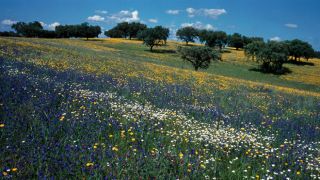
With sunny days reminding us that summer is on the way, Easter is an excellent time to visit Portugal.Stroll along the beach with temperatures that are sometimes enough for sunbathing and a swim in the sea, especially in the Algarve and Madeira; or immerse yourself in Nature, which renews itself in Spring in an explosion of colour and aromas waiting to be discovered in the Natural Parks of the North and Centre, in the Alentejo or on the Azores islands.

And why not take the opportunity for a bit of shopping, looking for the new trends and collections in the quality shops of Lisbon and Porto? Or to enjoy the gastronomic delights such as almonds covered in sugar or chocolate and the delicious folares (traditional sweet or savoury Easter bread). And for Easter Sunday lunch, you must follow the example of most Portuguese homes and try the roast kid.


But Easter is a time of deep Catholic significance all over Portugal. In Braga, holy week is celebrated with heavy religious solemnity and its highlights are Maundy Thursday (The Last Supper and Jesus washes the disciples’ feet), Good Friday (crucifixion and death of Jesus Christ), Holy Saturday (ascension to heaven) and Easter Sunday itself (Resurrection). In Óbidos, the last moments of the life of Jesus Christ on the Sacred Road are recreated, and in Castelo de Vide Jewish traditions bring a rich tone to the celebrations.


In other parts of the country, there are other reasons to celebrate. In Loulé, it’s the Feast of the Sovereign Mother, which attracts many visitors; and in Constância, the colourful boat processions at the Festival of Our Lady of the Good Voyage. And these are just a few suggestions. You’ll be sure to discover many more! Why not schedule your trip now?

Betty MacDonald, a very special politician and a year ago 
 
Roger Cicero - ESC winner 2007  


Many ESC fans from all over the world are so very sad because we lost Joy Fleming - one of the best singers ever. 


Betty MacDonald fan club founder Wolfgang Hampel sings  'Try to remember' especially for Betty MacDonald fan club organizer Linde Lund at Vita Magica September

you can join 


Betty MacDonald fan club


Betty MacDonald Society  


Vita Magica  


Eurovision Song Contest Fan Club 


on Facebook


Vita Magica Betty MacDonald event with Wolfgang Hampel, Thomas Bödigheimer and Friedrich von Hoheneichen


Vita Magica 

Betty MacDonald 

Betty MacDonald fan club 

Betty MacDonald fan club on Facebook

Betty MacDonald forum  

Wolfgang Hampel - Wikipedia ( English ) 

Wolfgang Hampel - Wikipedia ( English ) - The Egg and I 

Wolfgang Hampel - Wikipedia ( Polski)   

Wolfgang Hampel - Wikipedia ( German )

Wolfgang Hampel - LinkFang ( German ) 

Wolfgang Hampel - Academic ( German )

Wolfgang Hampel -   

Wolfgang Hampel - DBpedia  ( English / German )

Wolfgang Hampel - people check ( English ) 

Wolfgang Hampel - Memim ( English )

Vashon Island - Wikipedia ( German )

Wolfgang Hampel - Monica Sone - Wikipedia ( English )

Wolfgang Hampel - Ma and Pa Kettle - Wikipedia ( English )

Wolfgang Hampel - Ma and Pa Kettle - Wikipedia ( French ) 


Wolfgang Hampel - Mrs. Piggle-Wiggle - Wikipedia ( English)

Wolfgang Hampel in Florida State University 

Betty MacDonald fan club founder Wolfgang Hampel 

Betty MacDonald fan club interviews on CD/DVD

Betty MacDonald fan club items 

Betty MacDonald fan club items  - comments

Betty MacDonald fan club - The Stove and I  
 

Betty MacDonald fan club groups 

Betty MacDonald fan club organizer Linde Lund 
Easter in Poland


Easter in Poland


The first sign of approaching Easter in Poland is a large number of branches and dried flowers being brought to church. One week before Easter, Palm Sunday (in Polish niedziela palmowa) takes place. According to Catholic tradition, the day marks the entrance of Jesus in Jerusalem. Since palm trees are rare in Poland - although there is one known specimen - churchgoers often bring pussy willows or 'palms' made of colourful woven dried branches.

Ornamental representation of the tomb of Christ, photo: Anatol Chomicz / Forum
 
Ornamental representation of the tomb of Christ, photo: Anatol Chomicz / Forum
The Holy Week preceding Easter involves spring cleaning. In the countryside, people would use the occasion to repaint their barns. Religious fasts are sometimes observed in varying degrees of strictness. Families visit representations of the tomb of Christ, often decorated in a spectacular fashion for the occasion.

Easter basket containing ham, sausage, eggs, a sugar lamb and horseradish, photo: Maciej Goclon / East News
 
Easter basket containing ham, sausage, eggs, a sugar lamb and horseradish, photo: Maciej Goclon / East News
On the Saturday before Easter Sunday, Poles paint hard-boiled eggs (called pisanki). Some use store-brought kits which make the coloring and decorating easier, others continue to make dyes the traditional way - with boiled onion skins. Egg painting is encountered in several other Slavic cultures, and is thought to date back to talismanic pagan rituals that are over 5000 years old.
Another Saturday activity is the preparation of Easter baskets. Lined with a white linen or lace napkin and decorated with sprigs of boxwood (bukszpan), the baskets contain a sampling of Easter foods: pisanki, a piece of sausage or ham, salt and pepper, bread, a piece of cake and an Easter Lamb made of sugar or even plastic. They are brought to church to be blessed.

Traditional Polish Easter meal, photo: Wojciech Krajnik / Forum
 
Traditional Polish Easter meal, photo: Wojciech Krajnik / Forum
On the most important day, Easter Sunday, some go to church at 6am for the Resurrection mass – a ceremonial service and procession. Homes come alive with families who gather to eat breakfast. Before the meal, in much the same way as for Christmas with the sharing of the opłatek (Christmas wafer), people share wedges of the blessed Easter eggs from the basket. They exchange wishes and a Wesołego Alleluja (Joyful Hallelujah).
The breakfast is dominated by cold dishes and is a feast for meat lovers: ham, sausage, roast meats, pâté (pasztet), eggs, horseradish relish, bread. Easter breakfast is so decadent that it has to be considered a day-off from the Spring diet.

Babka, a sweet yeast cake, photo: Piotr Wojnarowski / Forum

 
Babka, a sweet yeast cake, photo: Piotr Wojnarowski / Forum

What follows is a frenzy of Easter cakes: a tall, round 15-yolk sweet yeast cake with a hole in the middle (babka) that can be compared to the American election cake, a mazurek - cake with a fat layer of icing, decorated with dried fruit, walnuts, almonds, roasted seeds or a cheesecake - sernik.

Youngsters celebrating Easter Monday, known as Śmigus-Dyngus (Wet Monday), photo: Michał Tulinski / Forum
 
Youngsters celebrating Easter Monday, known as Śmigus-Dyngus (Wet Monday), photo: Michał Tulinski / Forum
The last festive day is Easter Monday, known as Śmigus-Dyngus (Wet Monday), on which tradition requires that boys throw water over girls and spank them with willow branches.

Betty MacDonald, a very special politician and a year ago 
 
Roger Cicero - ESC winner 2007  


Many ESC fans from all over the world are so very sad because we lost Joy Fleming - one of the best singers ever. 


Betty MacDonald fan club founder Wolfgang Hampel sings  'Try to remember' especially for Betty MacDonald fan club organizer Linde Lund at Vita Magica September

you can join 


Betty MacDonald fan club


Betty MacDonald Society  


Vita Magica  


Eurovision Song Contest Fan Club 


on Facebook


Vita Magica Betty MacDonald event with Wolfgang Hampel, Thomas Bödigheimer and Friedrich von Hoheneichen


Vita Magica 

Betty MacDonald 

Betty MacDonald fan club 

Betty MacDonald fan club on Facebook

Betty MacDonald forum  

Wolfgang Hampel - Wikipedia ( English ) 

Wolfgang Hampel - Wikipedia ( English ) - The Egg and I 

Wolfgang Hampel - Wikipedia ( Polski)   

Wolfgang Hampel - Wikipedia ( German )

Wolfgang Hampel - LinkFang ( German ) 

Wolfgang Hampel - Academic ( German )

Wolfgang Hampel -   

Wolfgang Hampel - DBpedia  ( English / German )

Wolfgang Hampel - people check ( English ) 

Wolfgang Hampel - Memim ( English )

Vashon Island - Wikipedia ( German )

Wolfgang Hampel - Monica Sone - Wikipedia ( English )

Wolfgang Hampel - Ma and Pa Kettle - Wikipedia ( English )

Wolfgang Hampel - Ma and Pa Kettle - Wikipedia ( French ) 


Wolfgang Hampel - Mrs. Piggle-Wiggle - Wikipedia ( English)

Wolfgang Hampel in Florida State University 

Betty MacDonald fan club founder Wolfgang Hampel 

Betty MacDonald fan club interviews on CD/DVD

Betty MacDonald fan club items 

Betty MacDonald fan club items  - comments

Betty MacDonald fan club - The Stove and I  
 

Betty MacDonald fan club groups 

Betty MacDonald fan club organizer Linde Lund 

Easter in the United States

Easter in the United States


Easter is celebrated this Sunday. That is a major religious festival for Christians that is met with a big celebration. In most Christian countries, especially Catholic, Easter revolves around the death and resurrection of Jesus Christ. And in countries like the United States, the celebration of Easter is marked with large events and festivities, although some celebrate by just going to mass.

easter

Each country has their peculiar traditions, for example in America extraordinary Easter parades, where the people show off their special costumes and colourful bonnets. In times gone by, people bought new clothes for Easter which they wore to church. After church services, everyone went for a walk around the town. This led to the American custom of Easter parades all over the country. Perhaps the most famous is along Fifth Avenue in New York City.


In the USA, Easter is typically a holiday week, but now the school Spring Break doesn’t necessarily coincide with Easter. A must-play Easter game for American kids is Easter egg roll. It’s very common to organize Easter egg hunts with children. This is often done on Easter Sunday. Families hide plastic eggs filled with candy or a little treat, and children find them. The younger think that the Easter Bunny brings the eggs.


Easter Egg Hunt

In 1880, the First Lady invited children to the White House to the egg roll because civil servants had complained that they were ruining the lawn of the Capitol. The game has been held there since. The event has grown, and Easter Monday is the only day of the year when tourists are allowed to walk in the garden of the White House. The children, twelve years old and under, can participate in the egg rolling event.

EggRoll WhiteHouse

A special dish for Easter springtime is baked ham, potatoes, and vegetables. The mothers also cook eggs and decorate them together with the children using beautiful colours. These eggs can be eaten as natural but children often prefer chocolate eggs.

Chocolate Eggs


Betty MacDonald, a very special politician and a year ago 
 
Roger Cicero - ESC winner 2007  


Many ESC fans from all over the world are so very sad because we lost Joy Fleming - one of the best singers ever. 


Betty MacDonald fan club founder Wolfgang Hampel sings  'Try to remember' especially for Betty MacDonald fan club organizer Linde Lund at Vita Magica September

you can join 


Betty MacDonald fan club


Betty MacDonald Society  


Vita Magica  


Eurovision Song Contest Fan Club 


on Facebook


Vita Magica Betty MacDonald event with Wolfgang Hampel, Thomas Bödigheimer and Friedrich von Hoheneichen


Vita Magica 

Betty MacDonald 

Betty MacDonald fan club 

Betty MacDonald fan club on Facebook

Betty MacDonald forum  

Wolfgang Hampel - Wikipedia ( English ) 

Wolfgang Hampel - Wikipedia ( English ) - The Egg and I 

Wolfgang Hampel - Wikipedia ( Polski)   

Wolfgang Hampel - Wikipedia ( German )

Wolfgang Hampel - LinkFang ( German ) 

Wolfgang Hampel - Academic ( German )

Wolfgang Hampel -   

Wolfgang Hampel - DBpedia  ( English / German )

Wolfgang Hampel - people check ( English ) 

Wolfgang Hampel - Memim ( English )

Vashon Island - Wikipedia ( German )

Wolfgang Hampel - Monica Sone - Wikipedia ( English )

Wolfgang Hampel - Ma and Pa Kettle - Wikipedia ( English )

Wolfgang Hampel - Ma and Pa Kettle - Wikipedia ( French ) 


Wolfgang Hampel - Mrs. Piggle-Wiggle - Wikipedia ( English)

Wolfgang Hampel in Florida State University 

Betty MacDonald fan club founder Wolfgang Hampel 

Betty MacDonald fan club interviews on CD/DVD

Betty MacDonald fan club items 

Betty MacDonald fan club items  - comments

Betty MacDonald fan club - The Stove and I  
 

Betty MacDonald fan club groups 

Betty MacDonald fan club organizer Linde Lund 

Easter in Germany

Easter in Germany - 10 ways to celebrate just like a local

Easter in Germany - 10 ways to celebrate just like a local
Easter as celebrated in Lügde. Photo: DPA.


Whether it's setting giant rolling wheels ablaze, or decorating their 'Easter trees', Germans have some quite amusing traditions to entertain themselves during Easter.

The Easter season starts in earnest on Maundy Thursday, marking the last meal Jesus had with his disciples.
Easter traditions follow the religious calendar with Friday a day of mourning (the crucifixion of Christ) before Easter Sunday marking his resurrection.

If you really want to celebrate like a true German, let this list be your guide.


1. Eat something green


Photo: DPA

Gründonnerstag - Maundy Thursday in English - is the last time Jesus ate with his disciples before he was crucified in what is known as the Last Supper. But the word grün in Germany does not in this case mean the colour green. It actually comes from the old German word grunen or greinen, meaning to cry, as theologian Ingolf Hübner told Spiegel.
Nevertheless, many Germans make it their tradition to eat green foods on this day anyway, including spinach or Frankfurt's famous green sauce.

2. Eat your fish, stop dancing, and be quiet

 
Photo: DPA
On Good Friday, Karfreitag in German, traditionally no church bells are supposed to ring, no songs are sung and no music should be played as this is the day Jesus was crucified. The word Kar comes from old German Kara, meaning sorrow or grief.
 
For many places, this quiet time also means it is still illegal to dance on Good Friday. But whether anyone actually enforces this is another question.
 
And for Catholics, it is also a day of fasting when fish rather than meat should be eaten.
3. Make a bonfire


An Easter bonfire on the island of Norderney. Photo: DPA

On the night before Easter Sunday, Germans across the country gather around huge bonfires, sometimes built with the wood of old Christmas trees. Depending on the region, you might notice these bonfires are planned for different days of the Easter time Holy Week.
The fire marks the end of winter and the coming of spring - and some say it also drives away the evil winter spirits.

4. Make a wheely big fire


Easter as celebrated in Lügde. Photo: DPA

Not content with a standard fire, some regions stuff straw into a large wooden wheel, set it on fire and roll it down a hill at night. This is called the Osterräderlauf - Easter wheel run.

The burning wheel is supposed to bring a good harvest if all wheels released roll straight down the hill. Lügde in North Rhine-Westphalia is particularly famous for its burning wheel rolling.

5. Search for goodies from the Easter Bunny


Photo: DPA

You may already be familiar with this tradition, but the idea of an egg-hiding Easter Bunny actually came from the Germans first. There are many different theories for how the myth came about, and in some regions there were also Easter Foxes and Easter Cranes in the past.

SEE ALSO: The very deutsch origins of the Easter Bunny

6. Eat a lamb


Photo: DPA
The lamb in Christianity is a symbol of Jesus Christ, as he was the sacrificial "Lamb of God" sent to die for the sins of humanity.
So you might also see lamb on the menu for Easter. And some Germans also bake cakes in the form of a lamb.

7. Paint some eggs


A girl painting an ostrich egg. Photo: DPA
This is also a very traditional German custom. In fact, the oldest surviving decorated egg dates back to the fourth century AD, and was discovered in a Romano-Germanic sarcophagus near Worms in Rhineland-Palatinate.
8. Get an 'Easter tree'


Photo: DPA

Christmas isn't the only holiday in Germany involving a tree. Germans also like to decorate their foliage with colourful hanging eggs in time for Easter in what is known as an Osterbaum - Easter tree.
9. Fight with your eggs
 
One game that some German families enjoy playing on Easter is Ostereiertitschen or Eierklopfen - egg tapping - though it has different names in different regions.
 
The basic premise is that two players each hold a hard-boiled egg in hand and with it try to crack their opponent's egg as much as possible without damaging their own.
 
10. Go for a walk
 
Germans also use all their time off over the long Easter weekend to get a bit of exercise in der Natur. The public holiday on Easter Monday is often the best time to do this.

Easter in Sweden

Easter celebrations in Sweden


Easter (Sw. påsk, pronounced ”poh-sk”) is the foremost holiday in all Christian countries. Considering that Swedes, compared to most other nationalities, are a very secularized people, one can wonder how Easter is celebrated in Sweden. Do Swedes celebrate Easter at all? Yes, we do, but… the most common celebrations have their origin not in Christian mythology but in native superstition and folklore.
Still, we have a Christian history (and at least some Swedes attend church services during Easter… well, quite a few, actually). At least, our Christian history has left traces in the names of the holidays.

It may not be very likely, but in case you should find yourself discussing holidays with a Swede, you’d be better off if you knew about the funny day names in Stilla veckan (”Silent Week”), so let’s start with that, before we look into how Easter is celebrated in Sweden:

The days of the Holy Week

Blåmåndag, translating to ”Blue Monday”, is a commonly used Swedish name for Shrove Monday. This day has also, for unknown reasons, been known as Fläskmåndag (Pork Monday) or Korvmåndag (Sausage Monday). Maybe these were the original names, because the real Blåmåndag is actually the Monday before Lent… Why the name lately has migrated six weeks forward is yet one of the Easter mysteries.
Vita tisdagen means ”White Tuesday”. Like the previous name, this one has also migrated six weeks closer to spring: Vita tisdagen is originally another name for Fat Tuesday. Misunderstandings do happen.
Dymmelonsdag is the true name of the third day. It’s a weird name. The second part of the word, onsdag, means Wednesday, but the first part? The word dymmel is very old, quite archaic, probably with the same origin as the English word ”dumb” meaning ”mute”. The day got it’s name from the custom to dampen the sound of the church bells for the rest of the week by capping them with cloth or felt and exchange the bronze clapper with a wooden clapper.
Skärtorsdag is Maundy Thursday. This is also a funny word: in modern Swedish, ”skär” can mean the color ”pink” or the imperative ”cut”, but of course that’s not what it means here. It’s as archaic as the previous name and means ”purge” or ”clean”. It refers to the story about Jesus washing the disciples’ feet before the last supper. (But I bet that at least some in the younger generation think it means Pink Thursday – that would fit in nicely with Blue Monday and White Tuesday…)
Långfredag – you have already guessed it – means ”Long Friday”. To me, this seems more appropriate than the English name, Good Friday, at least in a Christian perspective.
The meaning of Långfredag is almost palpable to Swedes of a certain age: before 1969, no shops, restaurants, theatres – actually nothing – was allowed to be open on Långfredag. Everything was closed. The town seemed dead. There were only two TV channels, one showing church service, the other a documentary on shards of Etruscian clay pots. This day had to be filled with Ludo, Monopoly, or Solitaire, and Långfredag really seemed to be long, endless. Today, those interdicts are broken, and Långfredag is a ”red day” in the calendar, which means that most people are free from work and can frolic in shops, restaurants and entertainment.
Påskafton means just that: Easter Eve. True to the Swedish tradition to celebrate any given holiday on the day before the holiday, Påskafton is the day when Swedes celebrate Easter. (Swedes celebrate Christmas on Christmas Eve, Whitsun on Whitsun Eve, Midsummer on Midsummer Eve, and so on… maybe because that way, you can use the real holiday to tend your hangover?)
Påskdagen is of course Easter Sunday.
Annandag Påsk (Easter Monday) would in modern Swedish be called Andra Påskdagen, which translates to ”the second day of Easter”. It’s a red, work-free day.

Traditional Easter Celebrations

Godis! (candy, goodies)

Easter is an orgy in candy, chocolates, and toffee, delivered to the kids in large brightly colored påskägg, i.e. eggshells of cardboard, plastic or sheet metal; the bigger, the better. That is, kids are constantly sugar-speeded from skärtorsdag until late on påskafton, when the påskägg usually is empty and replenishment from their exhausted parents is unavailable.
In contrast to USA, children in Sweden usually do not believe that the eggs have been laid by the Easter Bunny, even if pictures of a bunny are common on their påskägg.

Påskris (~ Easter twigs)


"Påskris" – 500 years ago, the birch twigs were used for flogging
 
“Påskris” – 500 years ago, the birch twigs were used for flogging
If you haven’t done so already, skärtorsdag is the day when you cut thin twigs of birch and put in a vase, decorated with feathers or down of bright color.
Cutting birch twigs on skärtorsdag has its origin in the 17th century, preparing tools for flogging one another on the morning of långfredag to commemorate Jesus’ suffering. The flogging habit died several centuries ago, but the custom to take in birch twigs survived. The idea to beautify the whole thing with brightly colored feathers is however imported from Germany, as late as in the early 20th century.


Young witch trainee over Swedish woodlands
 
Witch trainee over Swedish woodlands

Häxor (witches)

Skärtorsdag is the day when witches supposedly travel to Blåkulla (~Blue Hill) to have intercourse with the devil before returning on the night before Easter Sunday. The place Blåkulla seems to exist only in mythology, even if some people mean – probably because of the name similarity – that Blåkulla is the island Blå Jungfrun (~the Blue Virgin) in the Baltic Sea. In popular belief, the witches make the journey riding on broomsticks, and on their way they’ll try to snatch children in order to present them to the devil.
This myth seems to have been formed in the 16th and 17th centuries. It was the time of witch trials, when thousands of people all over Europe (mostly women) were accused of collaboration with the devil, sentenced and burned at the stake. This gruesome business was common in most Catholic European countries, where some 30,000 women were executed after show trials, but it occured also in Protestant Sweden, albeit less frequent.

Påskkäringar and Påskbrev (~witches and Easter letters)


Påskbrev, self-made and preprinted, adorns the window of grocery shop Hagahallen in Karlstad after the shopkeepers FB announcement that every påskbrev will be rewarded with an Easter egg. Tradition reversed :-).
 
Påskbrev, self-made and preprinted, adorns the window of grocery shop Hagahallen in Karlstad after the shopkeepers FB announcement that every påskbrev will be rewarded with an Easter egg. Tradition reversed :-).
The original etymological meaning of the word käring is actually a dear person, ”a loved one”, but in today’s vernacular, käring means ”old woman”. And a påskkäring is a witch.
Anyway, a new habit was formed some 150 years ago, inspired by the waning belief about witches: children started to dress up as påskkäringar and distribute their own drawings in the neighbourhood, called påskbrev (~Easter letters).
This custom varies across the country: in the beginning, it might have been performed like the original procedure for giving julklappar (Christmas presents), i.e. knock on the door, throw in the object, close the door and run. This original procedure is still in use, among other places, in the rather rural western part of the province Värmland, and the påskbrev is filled with candy – i.e. it’s a gift to one’s friends.
Sadly enough, this commendable procedure has deteriorated in the cities, where kids made up as påskkäringar roam around offering pre-printed påskbrev to everybody in the neighbourhood, claiming godis in return. Just like Halloween… sigh.


Waiting for godisregn.
 
Waiting for godisregn.

Påskparad (Easter Parade)

An Easter Parade is arranged on skärtorsdag in some cities, after a modified American concept, with children dressed and painted as witches. In many cities, however, the parade takes place on påskafton.

The parade usually ends with a godisregn (candy rain).

Påskbrasa (Easter bonfire)


Traditional Easter bonfire ”påskbrasa” in Kinnahult, Västra Götaland (West Gothland)
 
Traditional Easter bonfire ”påskbrasa” in Kinnahult, Västra Götaland (West Gothland)
To scare witches away, the people used to light up påskbrasor, i.e. large bonfires. This custom is still common in the southwest part of Sweden, in particular in the province of Bohuslän, but is nowadays usually performed on Saturday instead of Thursday (makes you wonder, don’t they want their children back?).
Lately, this custom has taken on big proportions, creating problems on the islands outside of Gothenburg, where people have discovered that old Christmas trees make excellent bonfires. (Have you seen a dry spruce burn? The intensity is next to explosive.) People are competing for the biggest fire and are even raiding neighbouring villages and suburbs to steal their old Christmas trees. The bonfires have grown to a size that the fire brigade is needed to keep them under control, and local governments have to issue decrees of when, where, and how fires are allowed.
(Bonfires are still popular elsewhere and everywhere in chilly Sweden, but today the phenomenon is more common on Walpurgis Night, with speeches about spring, male choirs and general singalong.)

Påsksmällare (fire crackers)

In parallell to the bonfires, firecrackers used to be popular on påskafton, but after numerous accidents and intense propaganda from local authorities, this habit seems to be receding.

Äggpickning (egg pecking)

In the province of Skåne, in the southmost part of Sweden, äggpickning is a traditional game on the morning of Easter Sunday.
The object of the game is to crack the opponent’s egg. Contests are held in many places, most reknown on the pier in Simrishamn. Each contestant has to bring a painted hard-boiled egg. An umpire scrutinizes the contestants’ eggs to make sure they are real eggs, before the game can begin.
It’s a real knockout contest: the eggs are knocked against each other, tip against tip, until one breaks and loses. The winner gets the loser’s egg and goes on to meet next contestant. Finally there’s only one egg left intact, and the winner has enough eggs to feed all of his family and neighbours.

Food and drinks

Like anywhere in the world (?) Easter is associated with eggs also in Sweden, so egg dishes are of course a must on this holiday.

Egg halves with whitefish roe on påskbordet. Picture from icakuriren.se
 
Egg halves with whitefish roe on påskbordet.
Picture from icakuriren.se
Påskbordet, served on Easter Eve, is basically a version of the classic Swedish smörgåsbord, with the restriction that at this time of year, it must offer eggs prepared in several ways, and it must also offer a number of salmon dishes (cold cmoked, hot smoked, cured, baked, boiled…). The inlagd sill (pickled herring) is inevitable (yummy!), and over that, there is usually a selection of meatballs, sausages, pates and quiches.
Children drink påskmust (~”Easter sap”), a dark brown carbonated beverage flavored with secret ingredients (this is actually the same beverage as served at Christmas under the name of julmust). Adults usually drink beer and akvavit (except designated drivers, who of course will have to make do with påskmust).
Dinner on Easter Sunday is often a lamb steak, and to start with, there is usually a lot of leftovers from from the day before.

Betty MacDonald, a very special politician and a year ago 
 
Roger Cicero - ESC winner 2007  


Many ESC fans from all over the world are so very sad because we lost Joy Fleming - one of the best singers ever. 


Betty MacDonald fan club founder Wolfgang Hampel sings  'Try to remember' especially for Betty MacDonald fan club organizer Linde Lund at Vita Magica September

you can join 


Betty MacDonald fan club


Betty MacDonald Society  


Vita Magica  


Eurovision Song Contest Fan Club 


on Facebook


Vita Magica Betty MacDonald event with Wolfgang Hampel, Thomas Bödigheimer and Friedrich von Hoheneichen


Vita Magica 

Betty MacDonald 

Betty MacDonald fan club 

Betty MacDonald fan club on Facebook

Betty MacDonald forum  

Wolfgang Hampel - Wikipedia ( English ) 

Wolfgang Hampel - Wikipedia ( English ) - The Egg and I 

Wolfgang Hampel - Wikipedia ( Polski)   

Wolfgang Hampel - Wikipedia ( German )

Wolfgang Hampel - LinkFang ( German ) 

Wolfgang Hampel - Academic ( German )

Wolfgang Hampel -   

Wolfgang Hampel - DBpedia  ( English / German )

Wolfgang Hampel - people check ( English ) 

Wolfgang Hampel - Memim ( English )

Vashon Island - Wikipedia ( German )

Wolfgang Hampel - Monica Sone - Wikipedia ( English )

Wolfgang Hampel - Ma and Pa Kettle - Wikipedia ( English )

Wolfgang Hampel - Ma and Pa Kettle - Wikipedia ( French ) 


Wolfgang Hampel - Mrs. Piggle-Wiggle - Wikipedia ( English)

Wolfgang Hampel in Florida State University 

Betty MacDonald fan club founder Wolfgang Hampel 

Betty MacDonald fan club interviews on CD/DVD

Betty MacDonald fan club items 

Betty MacDonald fan club items  - comments

Betty MacDonald fan club - The Stove and I  
 

Betty MacDonald fan club groups 

Betty MacDonald fan club organizer Linde Lund