How Donald Trump’s tweets help Iran’s supreme leader
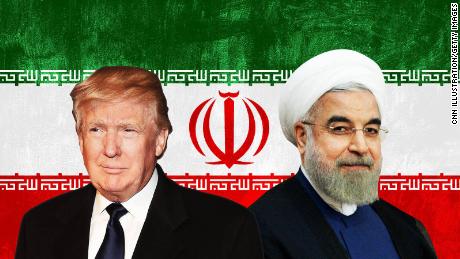
Since the beginning of the Iran protests
last week, Donald Trump has taken to Twitter to lend his support to
Iranian demonstrators who engaged in days of nationwide protests
criticising the regime for rising prices, economic mismanagement,
corruption and its regional foreign policy. In a series of tweets,
Trump has called on the Iranian government to “respect people’s
rights”, allow free expression and stop restricting the internet and
social media, warning that “the world is watching” and that it is “time
for a change”.
Trump sees these statements as demonstration of a robust new policy designed to curtail Tehran’s malign influence throughout the Middle East. What he fails to realise is that these strong messages of support for protesters coupled with policy shifts and increasing rounds of sanctions are just what the Islamic Republic needs to deflect attention from domestic protests. This diversionary strategy is not new but rather part of the Islamic Republic’s classic response to crises.Through these messages, Trump has sought to present himself in stark contrast to his predecessor, Barack Obama, who according to Trump and many in Washington single-mindedly supported the joint comprehensive plan of action (JCPOA), or nuclear agreement with Iran, rather than pressuring Iran over its regional foreign policy or voicing support for its 2009 green movement protests. Trump has taken a strong stance against the Islamic Republic for its support of regional proxy groups, meddling beyond its borders, its ballistic missile program and enmity of Israel. In addition to these steps, Trump has demonstrated his resolve by including Iranians in his controversial travel ban, as well as decertifying Iran’s JCPOA compliance despite repeated IAEA certification to the contrary.
However, these moves have played right into the hands of the Islamic Republic, which has long played the game of blaming foreign powers for meddling in its internal affairs. This strategy has its roots in Iran’s 1979 Islamic revolution, when revolutionary slogans of “independence, freedom and the Islamic Republic” and “neither east nor west” were emblematic of Iran’s new ideological foreign policy. Drawing from its own history of interactions with the UK, Russia and the Soviet Union, and the US, where the not-so-hidden hand of outsiders obstructed domestic movements for political change (for instance during the 1905-11 constitutional revolution, the 1953 coup against the Iranian prime minister Mohammad Mosaddegh and in Mohammad Reza Shah’s relationship with the US), the new regime capitalised on longstanding popular frustrations.
Over the years, it has used and abused these fears to generate a nationalism that pits Iran against the west. As tensions have ratcheted up with Saudi Arabia, Iranian leaders have also accused Riyadh of interference, particularly during the Islamic State-inspired terror attacks of June 2017. While these strategies of deflection are not lost on the Iranian population, they have in different periods succeeded in cultivating a degree of internal support.
In reaction to the protests, Iran’s supreme leader, Ali Khamenei, drew on the same autocratic toolbox, blaming enemies – the US, Saudi Arabia and Israel – for stoking internal dissent. In Khamenei’s first and only statement since the protests started, he said: “All those who are at odds with the Islamic Republic have utilised various means, including money, weapons, politics and intelligence apparatuses, to create problems for the Islamic system, the Islamic Republic and the Islamic Revolution.”The head of Iran’s revolutionary guard, Mohammad Ali Jafari, echoed these sentiments in declaring an end to the protests, suggesting that forces abroad ranging from monarchists, the dissident Mojahedin-e-Khalq and foreign powers had created “riot, anarchy, insecurity and intrigue in Iran”. Both leaders could have used this opportunity to take responsibility and build bridges with the people at a time of national crisis. Not wanting to appear weak, however, Khamenei in particular sought to rally regime supporters and Iran’s factional elite around the Islamic Republic’s flag.
In the next two weeks, Trump must also decide whether or not to renew sanction waivers as part of the JCPOA. In the current political climate, Trump could very well decide to not waive the sanctions as a means to further browbeat Tehran at a time of internal weakness. The hope here is that increased economic pressure would force the regime to return to the negotiating table to redress the nuclear agreement as well as its ballistic missile program and regional activities.In light of recent unrest, though, this is unlikely to happen. Rather, any reimposition of nuclear sanctions will deflect attention from the current domestic crisis, thereby allowing the regime to point to the longstanding excuse of foreign meddling as justification for its problems. This will ultimately strengthen Iran’s resistance narrative and continue to deprive Iranians of any meaningful reform.
Trump sees these statements as demonstration of a robust new policy designed to curtail Tehran’s malign influence throughout the Middle East. What he fails to realise is that these strong messages of support for protesters coupled with policy shifts and increasing rounds of sanctions are just what the Islamic Republic needs to deflect attention from domestic protests. This diversionary strategy is not new but rather part of the Islamic Republic’s classic response to crises.Through these messages, Trump has sought to present himself in stark contrast to his predecessor, Barack Obama, who according to Trump and many in Washington single-mindedly supported the joint comprehensive plan of action (JCPOA), or nuclear agreement with Iran, rather than pressuring Iran over its regional foreign policy or voicing support for its 2009 green movement protests. Trump has taken a strong stance against the Islamic Republic for its support of regional proxy groups, meddling beyond its borders, its ballistic missile program and enmity of Israel. In addition to these steps, Trump has demonstrated his resolve by including Iranians in his controversial travel ban, as well as decertifying Iran’s JCPOA compliance despite repeated IAEA certification to the contrary.
However, these moves have played right into the hands of the Islamic Republic, which has long played the game of blaming foreign powers for meddling in its internal affairs. This strategy has its roots in Iran’s 1979 Islamic revolution, when revolutionary slogans of “independence, freedom and the Islamic Republic” and “neither east nor west” were emblematic of Iran’s new ideological foreign policy. Drawing from its own history of interactions with the UK, Russia and the Soviet Union, and the US, where the not-so-hidden hand of outsiders obstructed domestic movements for political change (for instance during the 1905-11 constitutional revolution, the 1953 coup against the Iranian prime minister Mohammad Mosaddegh and in Mohammad Reza Shah’s relationship with the US), the new regime capitalised on longstanding popular frustrations.
Over the years, it has used and abused these fears to generate a nationalism that pits Iran against the west. As tensions have ratcheted up with Saudi Arabia, Iranian leaders have also accused Riyadh of interference, particularly during the Islamic State-inspired terror attacks of June 2017. While these strategies of deflection are not lost on the Iranian population, they have in different periods succeeded in cultivating a degree of internal support.
In reaction to the protests, Iran’s supreme leader, Ali Khamenei, drew on the same autocratic toolbox, blaming enemies – the US, Saudi Arabia and Israel – for stoking internal dissent. In Khamenei’s first and only statement since the protests started, he said: “All those who are at odds with the Islamic Republic have utilised various means, including money, weapons, politics and intelligence apparatuses, to create problems for the Islamic system, the Islamic Republic and the Islamic Revolution.”The head of Iran’s revolutionary guard, Mohammad Ali Jafari, echoed these sentiments in declaring an end to the protests, suggesting that forces abroad ranging from monarchists, the dissident Mojahedin-e-Khalq and foreign powers had created “riot, anarchy, insecurity and intrigue in Iran”. Both leaders could have used this opportunity to take responsibility and build bridges with the people at a time of national crisis. Not wanting to appear weak, however, Khamenei in particular sought to rally regime supporters and Iran’s factional elite around the Islamic Republic’s flag.
In the next two weeks, Trump must also decide whether or not to renew sanction waivers as part of the JCPOA. In the current political climate, Trump could very well decide to not waive the sanctions as a means to further browbeat Tehran at a time of internal weakness. The hope here is that increased economic pressure would force the regime to return to the negotiating table to redress the nuclear agreement as well as its ballistic missile program and regional activities.In light of recent unrest, though, this is unlikely to happen. Rather, any reimposition of nuclear sanctions will deflect attention from the current domestic crisis, thereby allowing the regime to point to the longstanding excuse of foreign meddling as justification for its problems. This will ultimately strengthen Iran’s resistance narrative and continue to deprive Iranians of any meaningful reform.
Betty MacDonald fan club founder Wolfgang Hampel sings 'Try to remember' especially for Betty MacDonald fan club organizer Linde Lund at Vita Magica September
you can join
Betty MacDonald fan club
Betty MacDonald Society
Vita Magica
Eurovision Song Contest Fan Club
on Facebook
Vita Magica Betty MacDonald event with Wolfgang Hampel, Thomas Bödigheimer and Friedrich von Hoheneichen
Vita Magica
Betty MacDonald
Betty MacDonald fan club
Betty MacDonald fan club on Facebook
Betty MacDonald forum
Wolfgang Hampel - Wikipedia ( English )
Wolfgang Hampel - Wikipedia ( English ) - The Egg and I
Wolfgang Hampel - Wikipedia ( Polski)
Wolfgang Hampel - Wikipedia ( German )
Wolfgang Hampel - LinkFang ( German )
Wolfgang Hampel - Academic ( German )
Wolfgang Hampel - cyclopaedia.net ( German )
Wolfgang Hampel - DBpedia ( English / German )
Wolfgang Hampel - people check ( English )
Wolfgang Hampel - Memim ( English )
Vashon Island - Wikipedia ( German )
Wolfgang Hampel - Monica Sone - Wikipedia ( English )
Wolfgang Hampel - Ma and Pa Kettle - Wikipedia ( English )
Wolfgang Hampel - Ma and Pa Kettle - Wikipedia ( French )
Wolfgang Hampel - Mrs. Piggle-Wiggle - Wikipedia ( English)
Wolfgang Hampel in Florida State University
Betty MacDonald fan club founder Wolfgang Hampel
Betty MacDonald fan club interviews on CD/DVD
Betty MacDonald fan club items
Betty MacDonald fan club items - comments
Betty MacDonald fan club - The Stove and I
Betty MacDonald fan club groups
Betty MacDonald fan club organizer Linde Lund